New U-M Poll Shows Many Older Drivers Aren’t Planning for the Road Ahead
While Most Older Adults Drive Frequently and Feel Confident, few have a plan for a time when they can no longer drive.
2–4 minutes

While Most Older Adults Drive Frequently and Feel Confident, few have a plan for a time when they can no longer drive.
A new University of Michigan National Poll on Healthy Aging shows that driving remains a key part of life for most adults age 65 and older. The vast majority still get behind the wheel weekly, and many drive most days. Just one in ten hasn’t driven in the past six months. And while confidence is high now, with more than 80% of older drivers believing they can drive safely today, that confidence drops sharply when they think five years ahead.
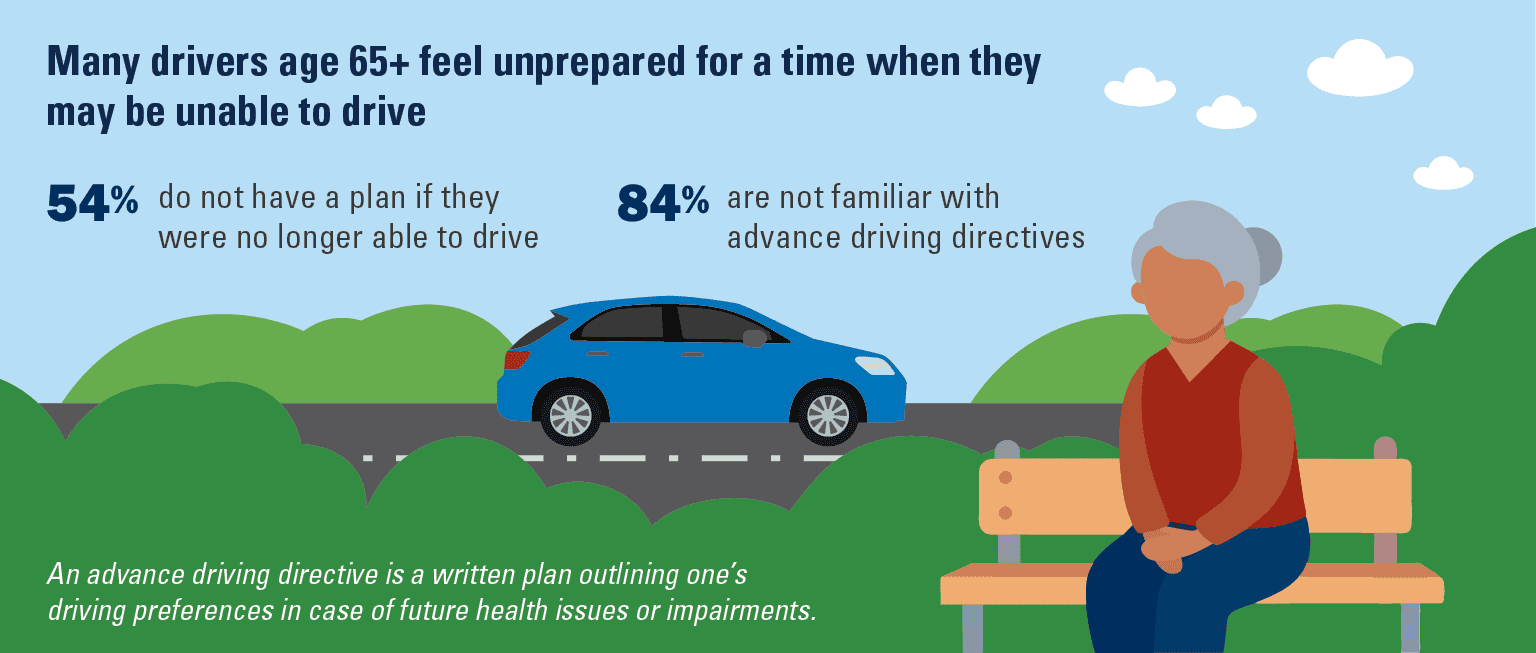
Despite this awareness, more than half of older drivers do not have a plan for the day when health or safety concerns might require them to stop driving. “The freedom to drive where you want, when you want, is a critical part of independent living for older adults,” said Renée St. Louis of the U-M Transportation Research Institute (UMTRI). With millions of Baby Boomers moving further into older adulthood, she and UMTRI research professor David W. Eby emphasize the growing need for both family support and stronger community transportation options.
The poll also sheds light on how older adults currently navigate transportation. Nearly half have relied on friends or family for rides in the past six months, and one in five has used rideshare services. Public transit use is much lower, and many older adults report that ride services or transit simply aren’t available where they live.
Health plays a major role in driving decisions too. Most older adults already avoid certain conditions—like bad weather or night driving—and some report vision or mobility issues that affect their time behind the wheel. Yet very few have ever talked with a health care provider about driving, even though specialists treating chronic conditions could help older adults prepare for future changes. Among those who have stopped driving recently, safety concerns and health issues were the most common reasons.
Planning ahead remains another major gap. Only a small share of older drivers has heard of an advanced driving directive, yet once the term was explained, most said it would be an important tool for outlining future preferences and decision-making.
“The reality is that driving needs can shift over time, and planning early, while a person is still driving safely, makes those transitions much smoother. Our goal isn’t to take away independence; it’s to empower older adults and families with the information and resources they need to stay safe and mobile.”
To help older adults and families prepare, UMTRI and the State of Michigan offer the Safe Drivers, Smart Options website, which includes guidance, planning tools, and downloadable resources in multiple languages. Additional support is available through the CDC’s MyMobility Plan, AARP and AAA driving courses, and local Area Agencies on Aging that often provide low-cost transportation services. UMTRI experts also encourage older drivers to explore newer vehicle safety technologies, such as adaptive headlights, backup cameras, and crash-avoidance systems, that can help extend safe driving years.
Together, these findings underscore the importance of early conversations, accessible transportation alternatives, and proactive planning to help older adults stay mobile, independent, and safe.
About the poll:
The national findings reflect a representative survey of 2,883 adults age 50–97, conducted in February 2025 by NORC at the University of Chicago for IHPI, funded by Michigan Medicine.
The Michigan analysis includes 1,353 adults age 50–95 and an oversample to better understand older adults’ mobility needs statewide.
The full poll can be found HERE.
Findings for the state of Michigan are found HERE
The data dashboard for Michigan is found HERE
This story is adapted from the works of Kara Gavin and Kate McAlpine